Sensors that survive a full season outdoors
Only SenseCAP equipment from Seeed Studio. One vendor, one LoRaWAN stack, one spare-parts list.
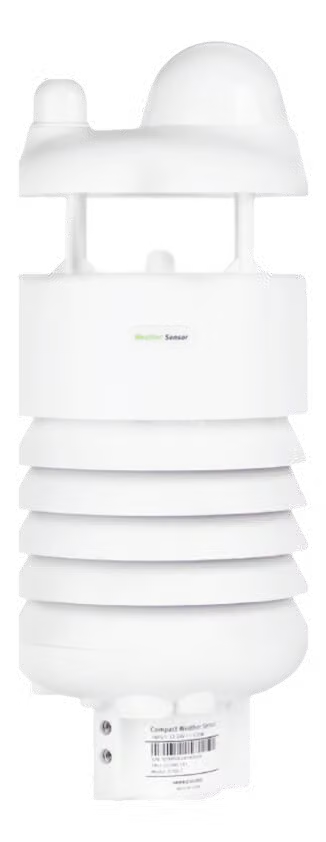
SenseCAP ONE Compact S700
Seven agro-meteorological parameters in one compact housing, with a radar rain gauge and a pyranometer. This is the station we put on a plot when there is only room for one instrument.
A tipping-bucket rain gauge blocks with leaves and a cup anemometer wears its bearings out. The S700 removes both failure modes: rainfall is read by radar and there is nothing that spins, so a season of dust, insects and frost does not gradually degrade the measurement.
The pyranometer matters more than it looks. Global solar radiation is what drives the reference evapotranspiration ET₀, and ET₀ is what turns rainfall into an actual water balance, how much of what fell is still available to the crop.
Measures
- Air temperature −40 … +85 °C operating range
- Relative humidity 0 … 100 % RH
- Barometric pressure Feeds the 3-hour trend
- Rain intensity Radar measurement, no moving parts
- Global solar radiation Pyranometer, W/m²
- Light intensity Photoperiod and daylight
- Wind speed and direction Averaged, with gust
Specifications
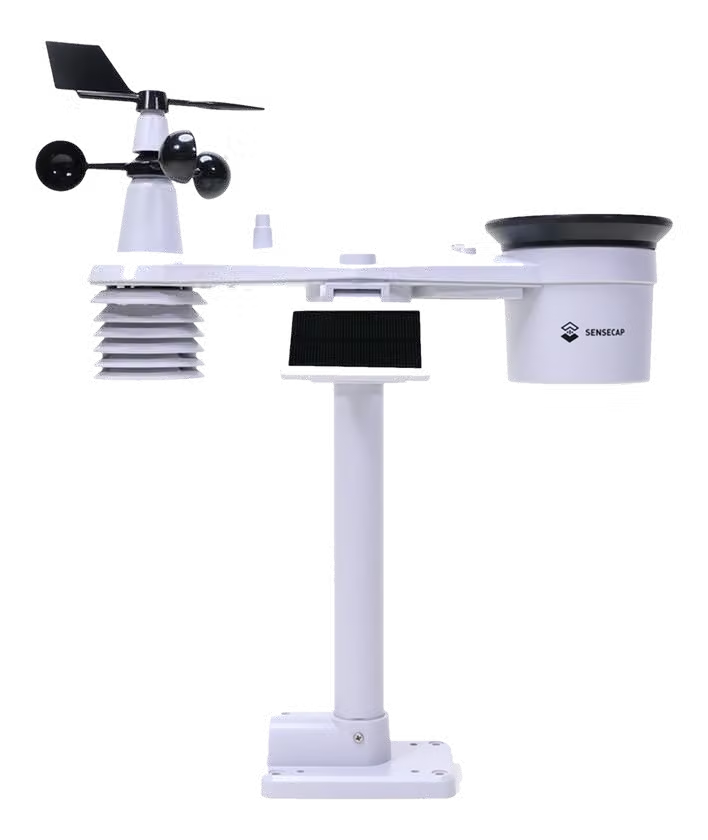
S2120, 8-in-1 weather sensor
A complete weather station that speaks LoRaWAN directly, with no separate data logger. The pragmatic choice when you want several measurement points rather than one very good one.
The S2120 joins the network on its own, no logger in between, and reports the eight parameters directly over LoRaWAN. That makes it easy to add a second or third measurement point once the first one shows how much plots differ from each other.
It has the classic mechanical rain and wind assembly, so it needs a yearly clean. In exchange, it costs a fraction of a professional station and reads UV, which the S700 does not.
Measures
- Air temperature
- Air humidity
- Barometric pressure
- Rainfall
- Wind speed
- Wind direction
- UV index
- Light intensity
Specifications
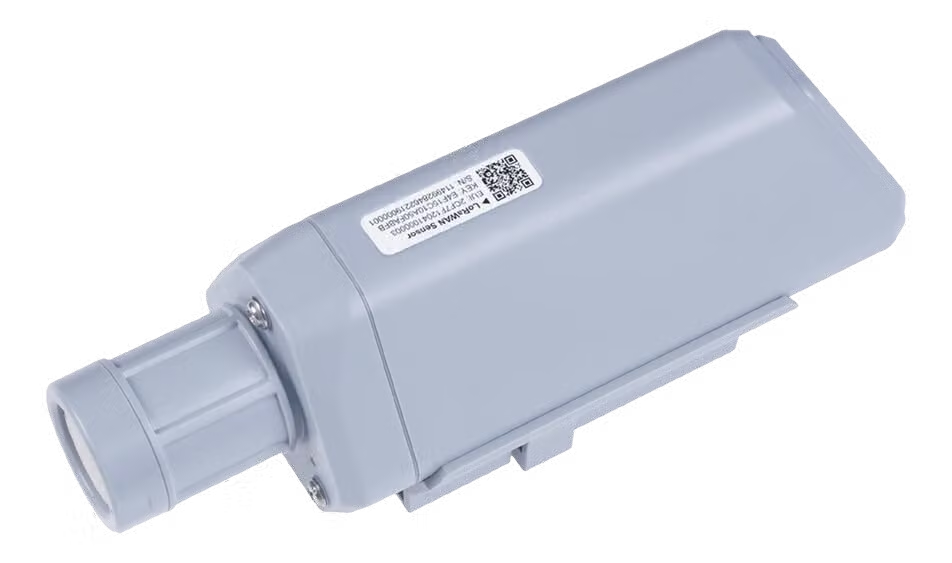
S2101, air temperature and humidity
The sensor you place where the weather station cannot reach: inside the canopy, at the bottom of the slope, in the greenhouse, in the storage room.
Two measurements, but the two that most agronomic reasoning depends on. Temperature and humidity give you the dew point and the vapour pressure deficit, and from there the leaf-wetness hours and the transpiration stress.
Because it is cheap and battery-powered, this is the sensor you scatter. Three S2101 units on a slope tell you where frost actually settles far better than one station at the top of the plot.
Measures
- Air temperature −40 … +85 °C
- Relative humidity 0 … 100 % RH
Specifications
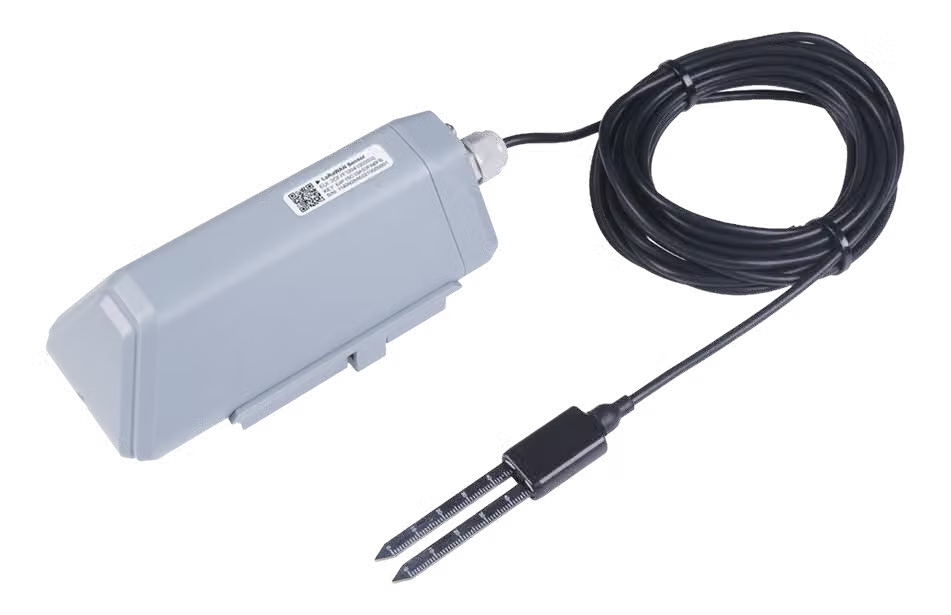
S2105, soil moisture, temperature and EC
The soil probe that closes the water balance. Without it you know how much rain fell; with it you know how much of it is still there.
Soil moisture is what decides irrigation, and it is the one quantity no forecast can give you. Buried in the active root layer, the probe shows when the reserve drops below the management point, the moment worth watering, rather than a date on a calendar.
Soil temperature governs germination and root activity; electrical conductivity tracks salinity, which is where over-fertilisation and poor water quality first become visible.
Measures
- Soil moisture 0 … 100 % volumetric (m³/m³)
- Soil temperature −40 … +80 °C
- Electrical conductivity 0 … 23 dS/m
Specifications
A gateway that does not care about the grid
Plots rarely come with mains power and fibre. The gateway runs on a solar panel with battery backup, sized so it keeps working through nine consecutive days without sun.
Data path
LoRaWAN sensors
Transmit every 10 minutes, kilometres of range, years on a battery.
MikroTik gateway
wAP LR8, 868 MHz, outdoor enclosure, pole-mounted.
ChirpStack
LoRaWAN network server: decoding, deduplication, device management.
NordOps Meteo
Storage, aggregation, indices, alerts, dashboard.
Power chain
Photovoltaic panel
100 W monocrystalline, mounted on the same pole as the gateway.
MPPT controller
10 A, maximum power point tracking, noticeably better than PWM on overcast days.
LiFePO4 battery
12 V and 100 Ah, tolerant of deep discharge and of cold.
Gateway
Roughly 5 W continuous, about 120 Wh per day.
Energy budget
Where the nine-day figure comes from:
The panel only has to cover the daily 120 Wh; in winter, at our latitude, 100 W does that in a few hours of usable light. The battery is sized for the bad stretch, not for the average.